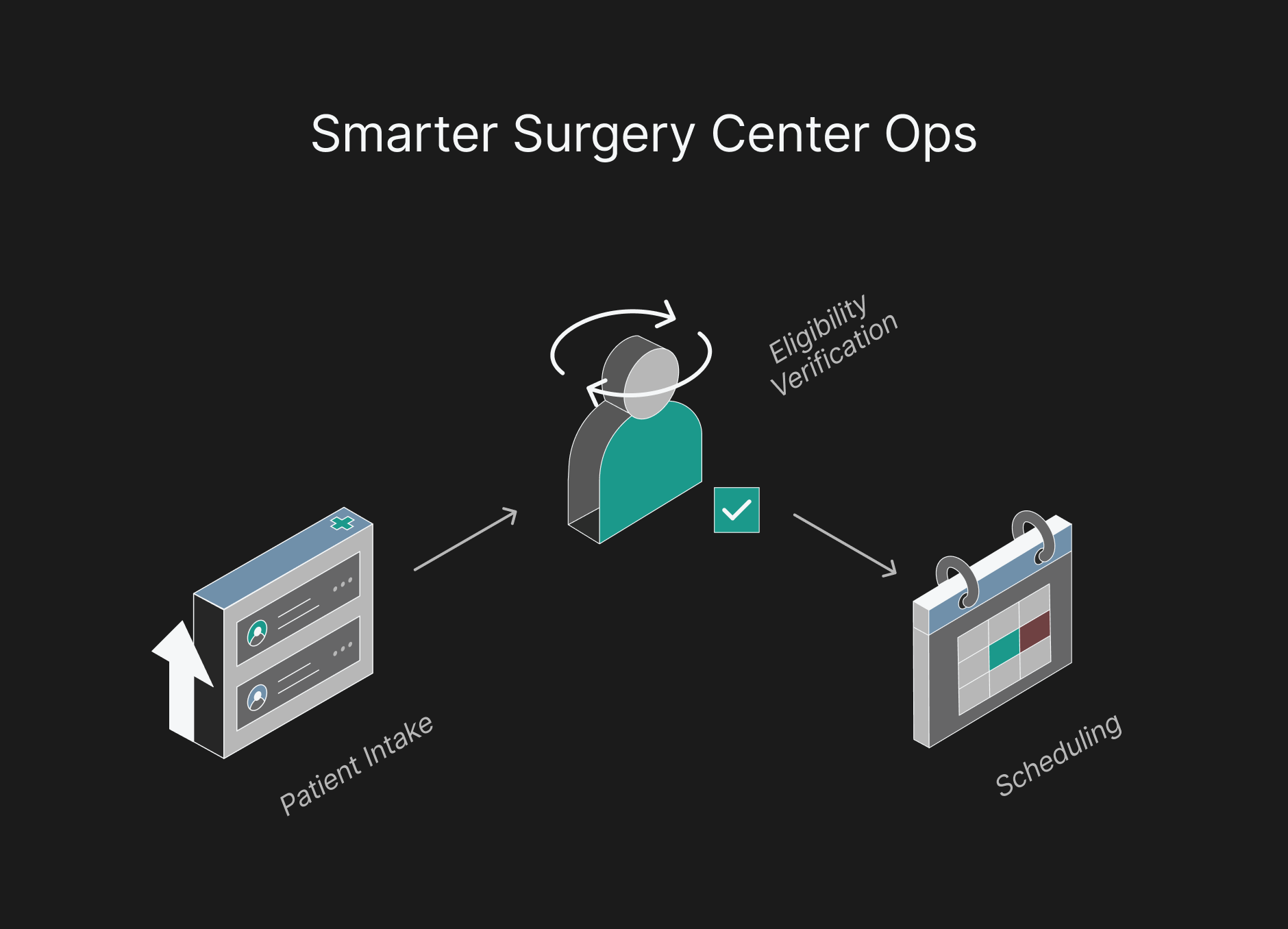
AI helps an ambulatory surgery center (ASC) in five operational areas: patient intake and scheduling, insurance verification and prior authorization, operating room utilization, patient communication and follow-up, and upfront cost estimates. The mechanism is the same in each area. The AI takes over a repetitive, manual step, such as keying data from forms, logging into payer portals, or placing routine follow-up calls, and runs it continuously with a documented record. ASCs combine the precision of hospital-based procedures with the agility and affordability of outpatient settings, but scheduling, eligibility checks, patient communication, and billing often still rely on manual work and disconnected systems. Patients play phone tag just to get a first visit. This post walks through the five areas where AI removes that friction and what changes when they connect.
How does AI streamline patient intake and scheduling?
Patient intake is the starting point for every care episode. When forms, phone calls, and verification steps are handled manually, the process becomes a bottleneck. Patients lose time, staff lose focus, and schedules fall behind.
AI-based intake tools can collect and validate patient data automatically. They guide patients through digital forms that check for missing details, pre-verify insurance coverage, and push data directly into scheduling systems.
The impact is immediate: fewer phone calls, fewer reschedules, and complete patient records before the day of surgery. Patients get faster confirmation, while staff spend more time managing care rather than paperwork.
Want this mapped against your own call and claim volume? Book a 30-minute audit
Can AI automate insurance verification and prior authorization?
Eligibility and pre-authorization remain the backbone of financial accuracy. Many surgery centers still depend on staff manually logging into payer portals to confirm coverage, even though the HIPAA 270/271 transaction covers the basic eligibility check electronically.
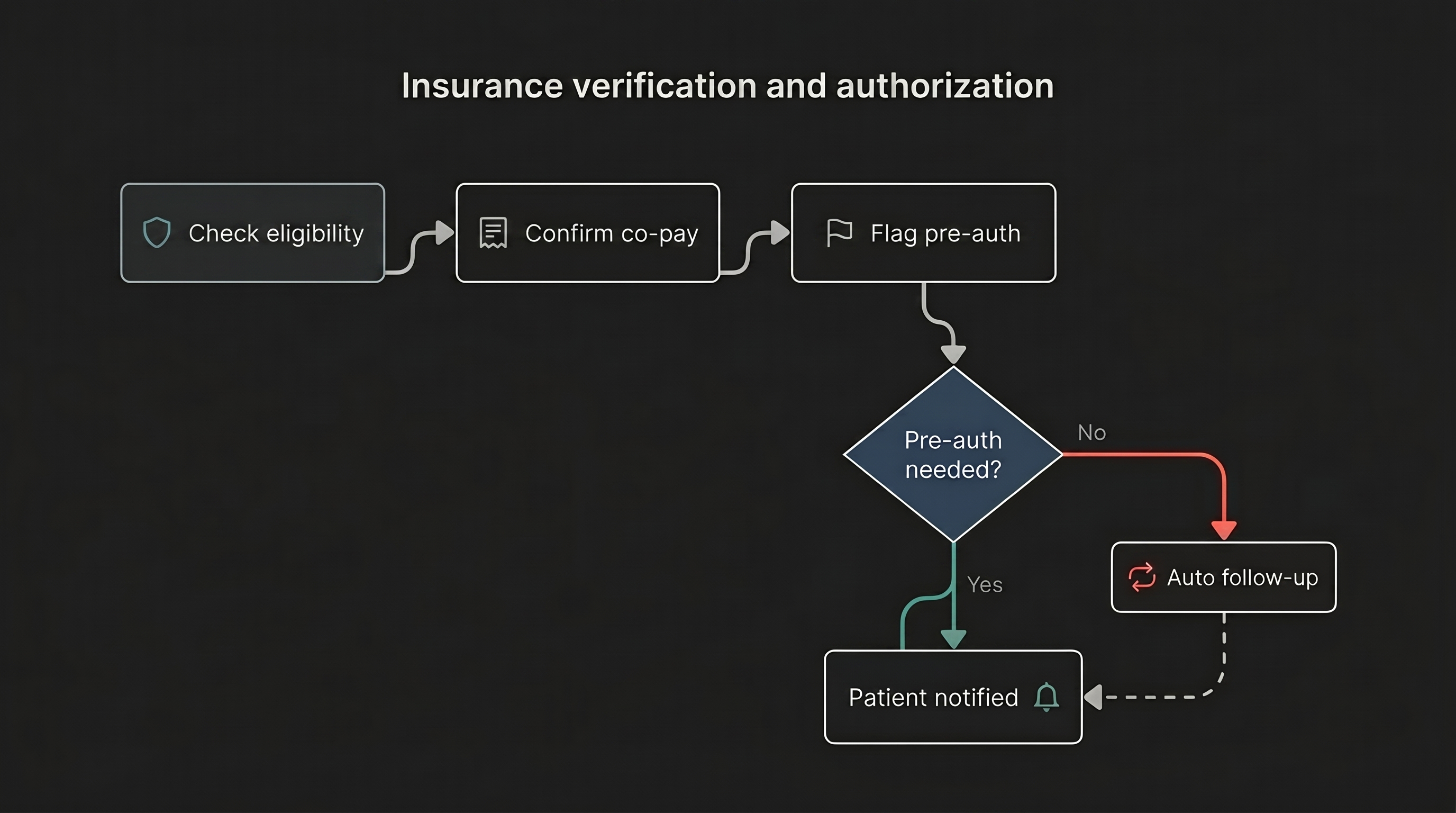
For an ASC these are the two checks that cancel cases when they fail. Flexbone runs both ahead of the surgery date with browser and voice agents and flags anything unresolved to the scheduler. See ASC prior authorization.
AI tools can now perform these checks continuously and in real time. They verify coverage, confirm co-pays and deductibles, and flag procedures that require prior authorization. When an approval is pending, they can follow up automatically, reducing idle time and avoiding last-minute cancellations.
This automation shortens payment cycles and protects margins. Just as importantly, it gives patients clear, accurate information before the procedure begins.
How does AI improve operating room utilization?
Operating room time is the most valuable resource in any ASC. Idle blocks or uneven scheduling can have a direct impact on profitability.
AI-driven scheduling systems can analyze historical case data to identify underused times, predict cancellations, and recommend optimal case sequences. When paired with after-hours chatbots or voice assistants, they can capture patient requests overnight and fill open slots by morning.
These systems allow surgery centers to improve utilization without adding staff or extending hours. For patients, it means faster access to care and fewer delays.
See what AI can run at your facility. In a 30-minute audit we map the calls, eligibility, and follow-ups Flexbone can take off your team first.
Book an auditHow does AI strengthen patient communication and follow-up?
Consistent communication is key to patient safety and satisfaction. Yet manual follow-up calls are time-intensive and inconsistent, especially in high-volume centers, and many facilities do not monitor the health and consistency of these communications at all.
AI-powered voice systems can automate routine outreach. They can call patients after surgery, collect recovery updates, and escalate urgent responses directly to clinical staff. They can also remind patients about medications, follow-ups, or satisfaction surveys.
This gives patients timely communication without overloading teams, while maintaining a documented record for quality and compliance.
Can patients get upfront cost estimates from an ASC?
Today's patients are informed, price-sensitive, and mobile. For many common procedures, such as cataract surgery, colonoscopy, and arthroscopy, they are not just comparing providers; they are shopping. If a patient searches for "cataract surgery in Atlanta" and your center is not visible, does not publish pricing, or cannot provide immediate availability, they will likely default to a large health system.
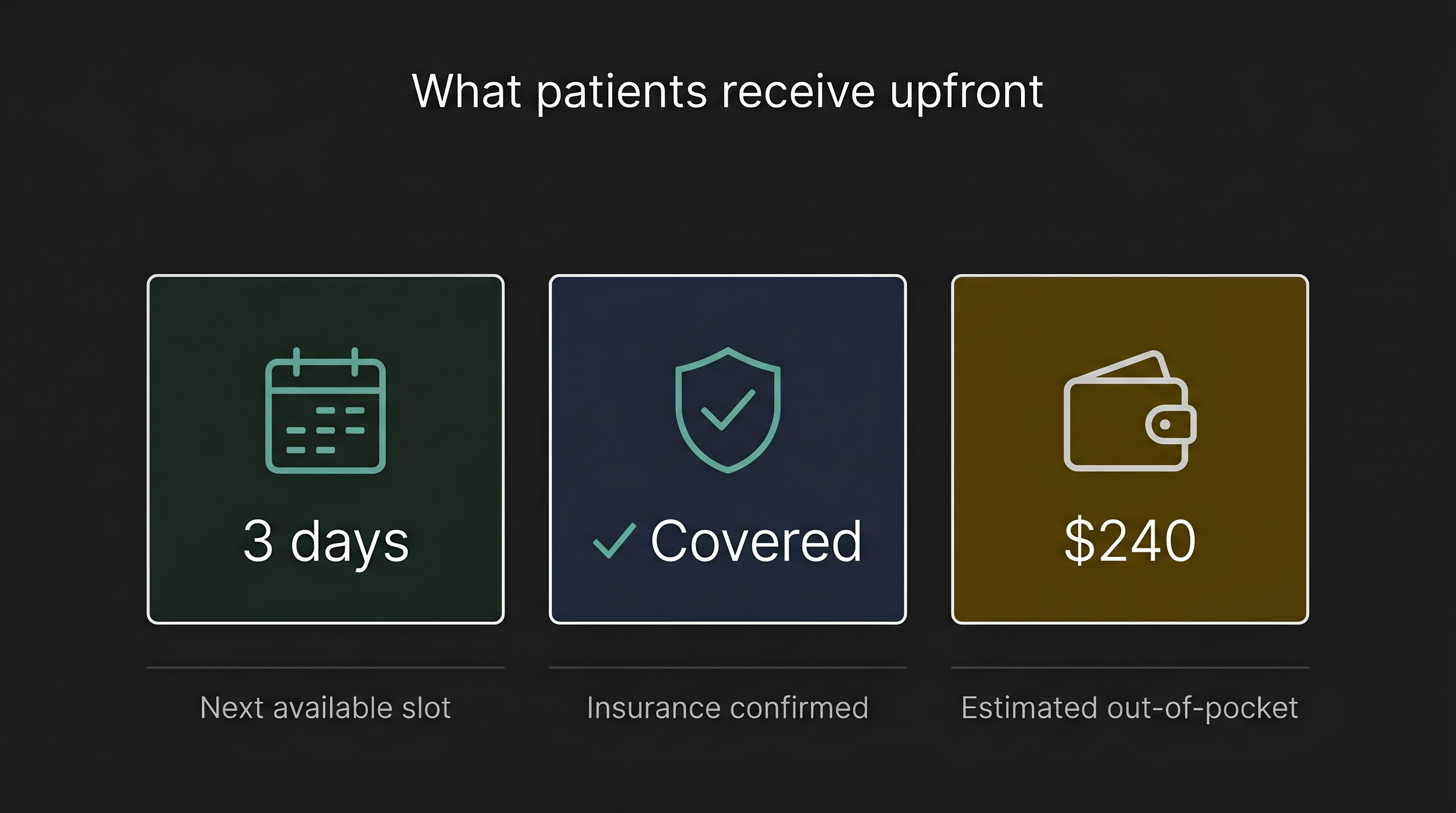
To stay competitive, ASCs need to make their offerings discoverable and their costs transparent. This means patients should be able to see when they can be scheduled, what their insurance covers, and what their total out-of-pocket cost will be before picking up the phone.
Traditionally, calculating that cost requires multiple staff touchpoints and payer calls. AI can collapse that process into seconds. By integrating eligibility data and payer fee schedules, AI systems can generate personalized cost estimates that include co-pays, deductibles, and coinsurance. Patients can receive these estimates automatically via text or email, confirm their appointment, and even complete prepayment or financing steps online.
This level of transparency is good service and a conversion strategy at the same time. It reduces phone tag, eliminates uncertainty, and helps ASCs compete directly with hospitals on convenience and confidence. Centers that master upfront pricing attract more patients, accelerate collections, and strengthen long-term loyalty.
What changes when these workflows connect?
The best-run ASCs are no longer thinking of automation as a point solution. They are connecting every operational layer from intake to insurance to payment into a unified, intelligent workflow. AI serves as the connective tissue that links these processes and provides real-time visibility across them.
When information moves without friction, staff can shift from reactive to proactive work. Denials are prevented rather than corrected. Patients receive answers immediately rather than after multiple calls. Every improvement compounds, building efficiency and trust throughout the organization.
Where should a surgery center start?
For surgery centers, transformation does not mean replacing staff or overhauling systems overnight. It means identifying the most time-intensive workflows and applying AI to simplify, accelerate, and connect them. Intake, insurance verification, and follow-up calls are common first choices because they are repetitive, rule-based, and easy to measure.
In a marketplace where patients are price-conscious and competition is strong, the ASC that delivers clarity, access, and reliability stands apart. To map which of your center's workflows AI can take on first, book a call with Flexbone.