Forward Deploying to Build AI Agents
Forward deploying means placing engineers inside the customer's operation while the AI agent is built. The engineer watches the real workflow, connects the agent to the systems already in use, and tunes it against failures that only appear in production. This is how Flexbone builds agents that hold up inside hospitals, billing teams, and contact centers: the build happens where the work happens. The sections below define forward deployed engineering, explain why AI agents need it, and describe how data integration and tailoring decide whether an agent works.
AI agents have moved beyond demos. They're booking appointments, processing claims, answering support calls, and helping real teams get work done. But building an AI agent that actually works inside real-world systems, with all their quirks and edge cases isn't just about choosing the right model or API. It's about how you build.
What is Forward Deployed Engineering?
Forward deployed engineering means putting engineers directly in the loop with the people using the product. Instead of building generic tools far from the customer, these engineers work side by side with operational teams inside hospitals, contact centers, billing teams, or wherever the process lives. They are not just writing code. They observe real usage, handle unexpected failures, connect to legacy systems, tune logic, and adjust the agent to reflect the actual workflow rather than an idealized diagram.
Why It’s Essential for AI Agents
AI agents don’t operate in a vacuum. They’re not “out-of-the-box” tools that just plug in and run. They require tailoring, context, and continuous refinement. Forward deployed engineers make that possible.
Real-world workflows aren’t clean. Prompts break, portals timeout, users go off-script, and every system has its own quirks. You only catch this stuff when you're close to the ground. FDEs see what fails and immediately iterate, redesign, or patch it in real time.
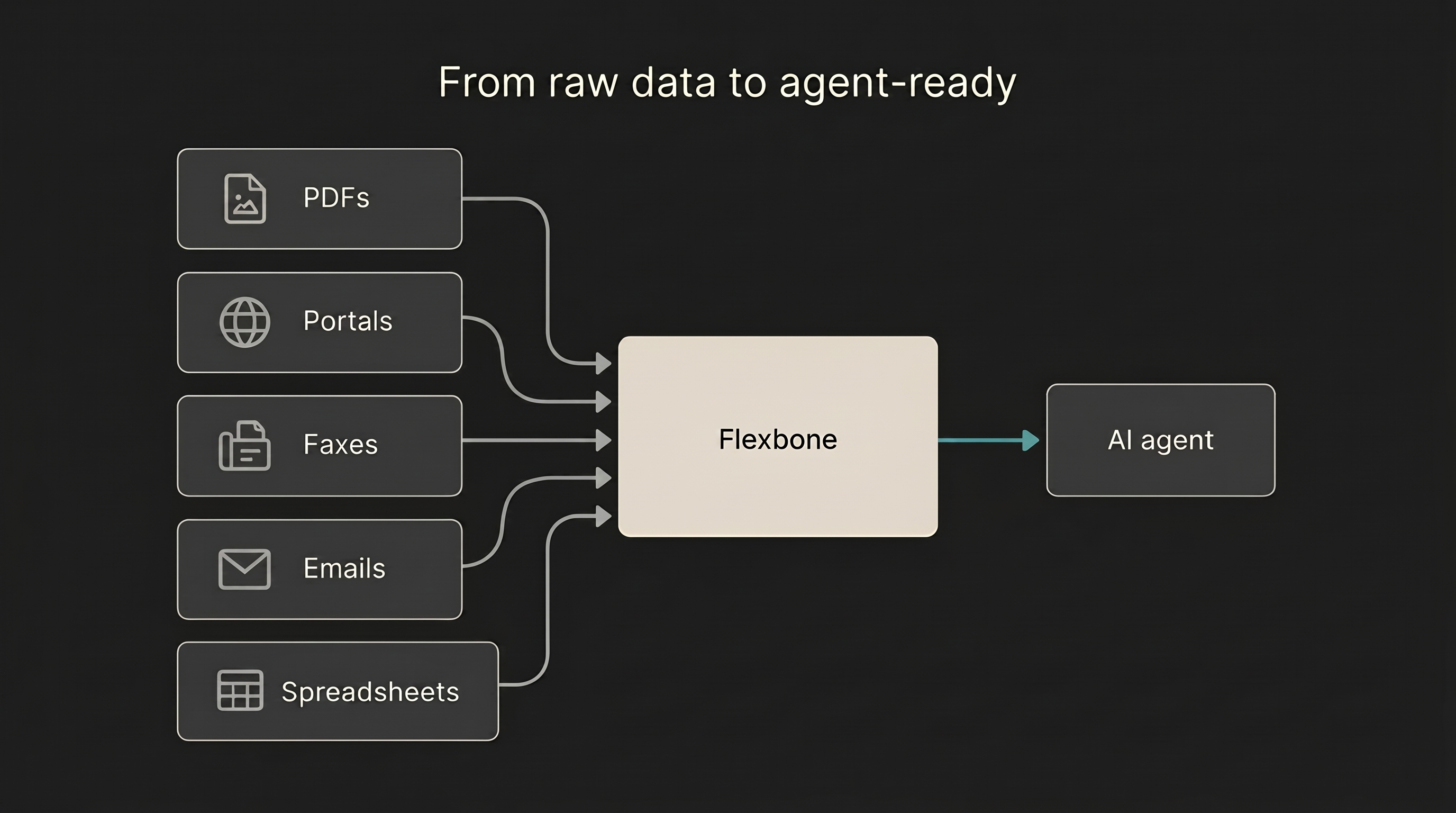
Data integration is critical. Most of the value from AI agents comes from their ability to act on high-quality, real-time data. In many organizations, however, that data is trapped in PDFs, browser portals, faxes, emails, or spreadsheets. Forward deployed teams build the adapters, scrapers, and pipelines needed to extract, clean, and structure this data so it can be used effectively by the agent. Without this foundation, the agent cannot reason properly and may hallucinate or stall.
Tailoring is what makes the agent actually useful. A good AI agent is designed to match your org’s workflows, language, systems, and expectations.
Deploying multiple agents in this way surfaces insights that static point solutions cannot. When agents are embedded in key workflows such as calls, messages, scheduling, and billing, they generate rich data that did not previously exist. For many organizations, this creates a new data keystone that becomes home to some of their most valuable information. This data not only improves the agents themselves but also gives leadership visibility into process bottlenecks, common pain points, and automation opportunities that would otherwise remain hidden.
Where does forward deployment show up in healthcare?
In healthcare, the highest-value workflows are spread across disconnected systems. Insurance eligibility checks run in payer portals. Prior authorization and claim status follow payer-specific paths. Scheduling lives inside EHRs such as Epic, eClinicalWorks, and Experity. A forward deployed engineer maps how the team actually moves between those systems, then builds the agent to run the same path and log every action for review. To see what forward deployment looks like against your own workflow, book a call with Flexbone.