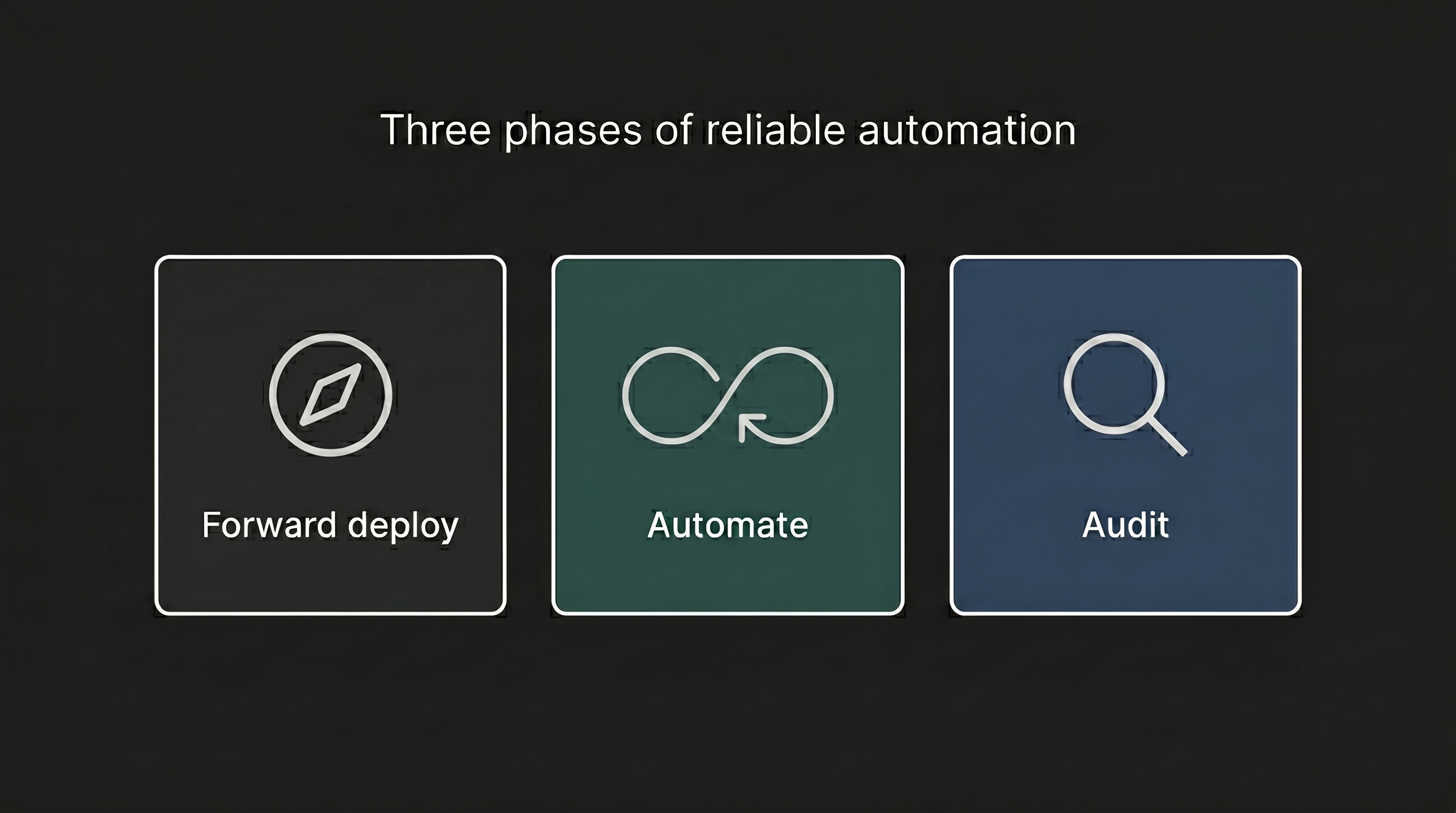
A reliable AI agent in healthcare is one that completes the same task correctly every time, not one that works in a demo. A single missed data point or misread field can lead to billing errors, compliance issues, and lost revenue. Flexbone builds that reliability with three practices: forward deploy, automate, audit. Engineers first sit with the team and document how the work is actually done, including the edge cases. The agent then automates the structured, rule-based steps, such as checking insurance eligibility in a payer portal. Every action stores evidence, including screenshots, logs, and sources, so it can be replayed and verified. Under the hood, each agent is a modular system with a planner, an executor, and an interpreter, tested independently like production software. When confidence drops, the agent pauses and hands the task to a person.
What does the manual workflow look like before automation?
Before automation can begin, it helps to understand what these systems actually do. Take a common example: checking a patient's insurance eligibility. Traditionally, a team member logs into an insurer's website (often called a payer portal, which is simply an online dashboard where hospitals and clinics check insurance details), enters patient information, waits for the system to load, finds the right coverage details, and records the results in their billing software. The electronic version of this check is the HIPAA 270/271 eligibility transaction, but many payers still require their own portal for full benefit detail.
Now imagine doing that thousands of times a day across hundreds of insurers, each with different layouts, quirks, and update schedules. That is where Flexbone's agents come in.
Want this mapped against your own call and claim volume? Book a 30-minute audit
Why is reliability at scale the hard part?
Getting an AI agent to do something once is easy. Getting it to do that hundreds of times across hundreds of systems, safely and consistently, is the real challenge. At Flexbone, we treat AI agents the same way experienced engineers treat production software, with structure, testing, and traceability.
What does Forward Deploy, Automate, Audit mean?
1. Forward deploy
We start by deeply understanding how the work is actually done. Our teams sit with partners, observe real workflows, and document the edge cases, not just the "happy path." This ensures the AI understands the full reality of the process before it ever runs on its own.
2. Automate
Next, we automate what can be automated, often the repetitive and error-prone steps. AI agents excel at structured, rule-based tasks such as reading, comparing, or entering information. This allows human experts to focus on complex situations that require judgment or empathy.
3. Audit
Finally, every action an agent takes must be explainable. We design agents to show their work, storing evidence such as what they saw, what decision they made, and why. They take screenshots, log data, and cite their sources. This makes them not just reliable, but accountable. Each action can be replayed and verified, just like testing buttons or functions in a mobile application.
See what AI can run at your facility. In a 30-minute audit we map the calls, eligibility, and follow-ups Flexbone can take off your team first.
Book an auditHow is a Flexbone agent engineered?
Flexbone agents are not single "black box" models. They are modular systems built for transparency and control. Each agent includes three key parts:
- Planner: Decides the next step based on context and goals.
- Executor: Carries out clear, rule-based actions such as navigating a workflow or submitting a request.
- Interpreter: Reads results, extracts the important details, and standardizes them for reporting or storage.
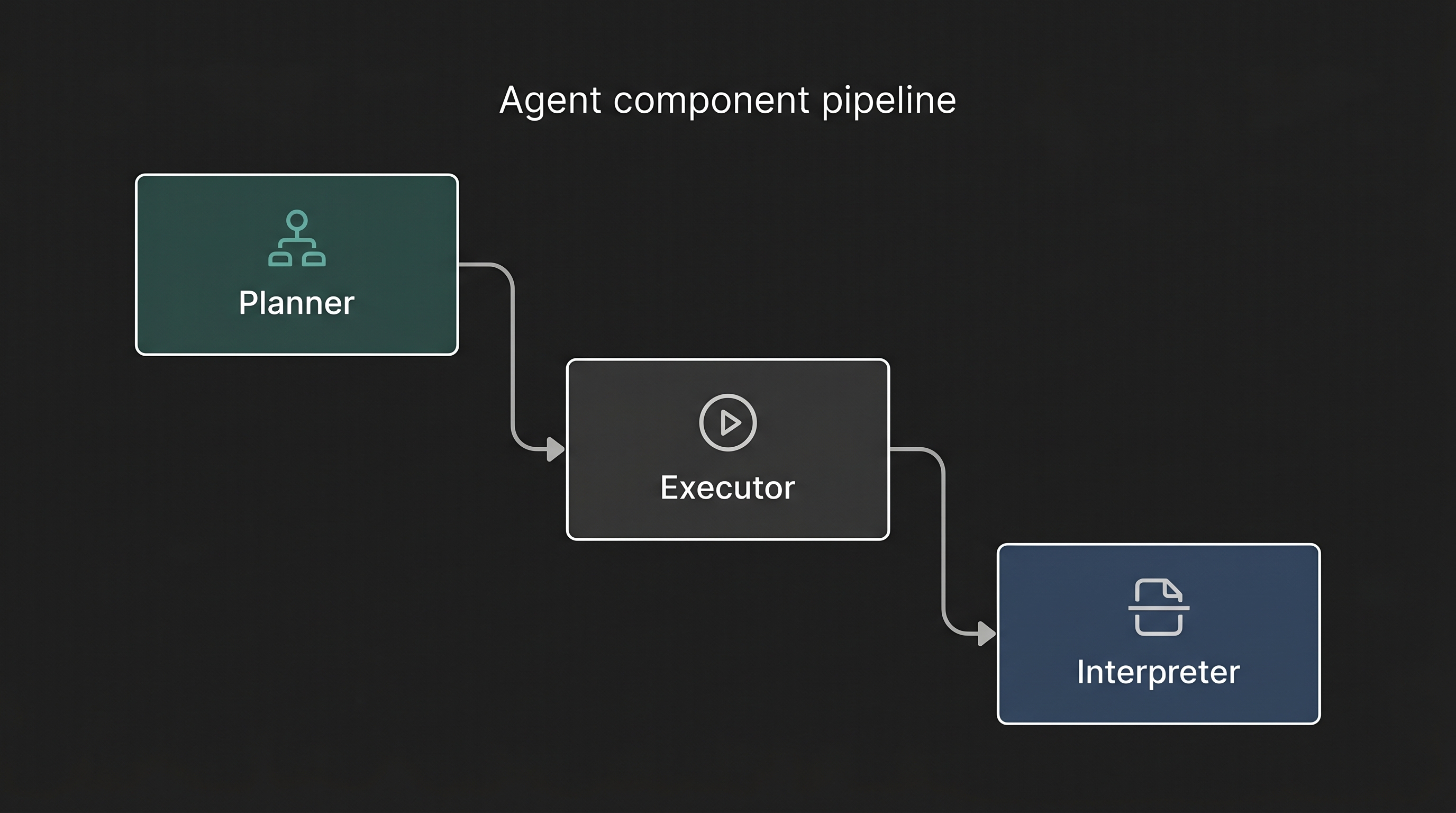
Because each part is separate, we can test them independently. If one component breaks or behaves unexpectedly, it can be fixed and revalidated without touching the rest. This modular structure makes agents debuggable, testable, and continuously improvable.
How do agents stay accurate over time?
Our agents do not just run; they report back. Every version is monitored for accuracy, speed, and escalation rates. If something looks unfamiliar or confidence drops below a safe threshold, the system pauses and sends the task to a human reviewer. That feedback is not wasted; it becomes training data that improves the next version.
Do the same principles apply beyond eligibility?
Eligibility checks are only one part of the revenue cycle. The same reliability principles apply to other workflows too. For example, one of our voice agents assists patient access teams. It answers routine billing and claim status calls, listens for key information, confirms details with patients, and logs outcomes directly into the system of record. When a patient asks a question that falls outside its confidence range, it immediately transfers the call to a human representative and passes along the full transcript. This ensures no detail is lost and no patient is left waiting.
Like our data agents, the voice system records every interaction for quality review and retraining. Each call becomes part of a continuous improvement loop, keeping the agent accurate and natural in its responses.
What makes automation reliable?
Reliable automation does not come from larger AI models or clever prompts. It comes from disciplined engineering:
- A deep understanding of real workflows
- Careful automation of repeatable tasks
- Transparent auditability at every step
That is how Flexbone scales automation safely across healthcare. From eligibility checks to patient communication, our agents are built to be consistent, traceable, and accountable.
How does Flexbone scale tailored agents?
Flexbone's strength comes from its modular core product. We do not deploy a generic, one-size-fits-all agent. Instead, we bring a set of core components refined through production use: browser automation, decision-making engines, and claims processing modules that can be tailored to each organization's specific needs.
This approach allows us to forward deploy quickly while maintaining reliability. Our foundational systems have been refined through investment and testing. By reusing these proven components and layering customer-specific logic on top, we can scale AI solutions across many clients without compromising stability or transparency.
Most importantly, the audit layer remains central. Reliability does not end at deployment. Each customer needs ongoing visibility into how their AI agents are performing months and years later. Our systems are designed so teams can continuously check in, validate decisions, and confirm that automation is still working exactly as intended.
That is how Flexbone builds AI agents you can trust, not just today, but over time. To see how these agents run against your own eligibility, claims, or patient access workflows, book a call with Flexbone.